
SUSAN TYNER | CONTRIBUTOR
My husband Lee and I do not fight a lot, but when we do, it’s usually over something small. During our first year of marriage, our fights started in the kitchen. He had a way of cleaning knives because he worked in a restaurant growing up. Since I grew up cooking (and washing a lot of dishes), I didn’t really think that advice applied to me. When he insisted his way of knife handling was better than mine, I took it personally. Two hours later, we were making up after a huge fight. Turns out, the fight was not about the knife, but control.
Before you think this is a “how to” marriage blog, hear my next kitchen story. For context, this is after thirty-six years in the kitchen. We have learned we have different approaches to meal prep. I tend to go fast and “eyeball” measurements while Lee’s perfectly chopped onion would make any sous chef jealous.
Recently, I was cooking a recipe for the umpteenth time while Lee and our youngest daughter, Rebecca, were hanging around the kitchen island. Lee kept on asking questions about what I was doing to the point of triggering another Iron Chef battle episode. Although that was not his intent, it was slowing me down and I could feel my heart wanting to grab control of my kitchen. Before that could happen, Rebecca says in her twenty-something slang, Dad, let Mom cook!
Since then, these words have stuck, but not when it comes to my marriage, but to my control issues with God. Most days I feel like I’m in the kitchen of life, sifting through my recipes to cook what I want. However, when the Great Chef of providence takes my recipe cards away and starts messing in my kitchen, I tend to interject “are you sure?” questions, suggest my preferences of ingredients, and even yell that’s too much hot sauce! However, since that day in the kitchen, when I feel the urge to interfere or question what God is doing in my life, I hear Rebecca’s words and think,
Let God Cook.
I know He is the Executive Chef, but His cooking style makes me very uncomfortable as flour falls on the floor or the pots are just about to boil over. The same is true for the kitchens of my struggling family or overwhelmed friends. I start to doubt the recipes He using in their lives, too. But then, I hear it again.
Let God Cook.
When God bakes, we cannot read the cookbook He has in His hands. After all, His recipes are not our recipes, and His ways around the kitchen are far above ours (Is. 55:8-9). I wonder if William Cowper felt the same pull when he wrote, God works in mysterious ways, His wonders to perform.[1] When the LORD works in mysterious ways, can we trust him, even though it seems He is grabbing a heavy spatula when I think a wooden spoon would get the job done just as well? A miscarriage, unemployment, conflict with a best friend, cancer: none of these are our go-to recipes for being more Christ-like.
Over time, however, I’m continuing to learn to trust Him even when things seem unsavory. I remember the great dishes He’s served me despite the messy process. When I am confused over what He’s cooking for me or my loved ones, He encourages me to go to others who have tasted God’s more unappetizing dishes. They tell me how His world class dessert made it worth getting through that clumpy gravy.
I’ve seen that He does not sanctify me by “eyeballing” things as I do, but by precise measurements of tears (Psalm 56:8) needed for the rise He wants in my heart (Psalm 51). Also, God’s palate is perfect. No one can taste the spoon and know exactly what my dish needs more than He (Jer. 1:5 with Psalm 139:13-18) even though I wince at the seasoning He grabs.
Finally, our God has a wide range of ingredients at His fingertips, so He may cook some vegetable I have never tasted before. As scary as those unfamiliar smells are coming from the kitchen, He stretches me to trust His taste so I do not turn my nose up at the dinner table and miss out on a delicacy.
Beyond that, God uses my kitchen to feed more than just me and mine. My cooking is determined by the size of my kitchen and what I brought home from the grocery. But when God is cooking in my kitchen, He thinks beyond my limited oven space. He grabs two leftover fish from the frig and pulls out the five loaves of bread getting stale in my pantry. Like the disciples (Matt. 14), I hate this sort of last-minute meal planning. I panic as they did when Jesus tells them to feed 5000 anyway, and I start to question, interrupt, doubt, and slow Him down.
Again.
Rebecca would say to those disciples, as I say to myself now, Let God Cook. Grab a stool at the island and watch in delight, not fear, in how He whips up something out of nothing! In His kitchen, water becomes wine; slaves become saints; and a shameful death on a cross yields to an empty tomb. Trust Him with the spices and pans He uses to change you. He is wanting to present you faultless (Jude 24) to His Father in Heaven as another amazing signature dish. And listen as the Father responds, Bon Appetit! (Matt. 25:21)
[1] “God Moves in a Mysterious Way,” a poem written in 1773 by the 18th-century English poet William Cowper, after an attempted suicide. John Newton published the poem the next year in his Twenty-six Letters on Religious Subjects; to which are added Hymns (1774).
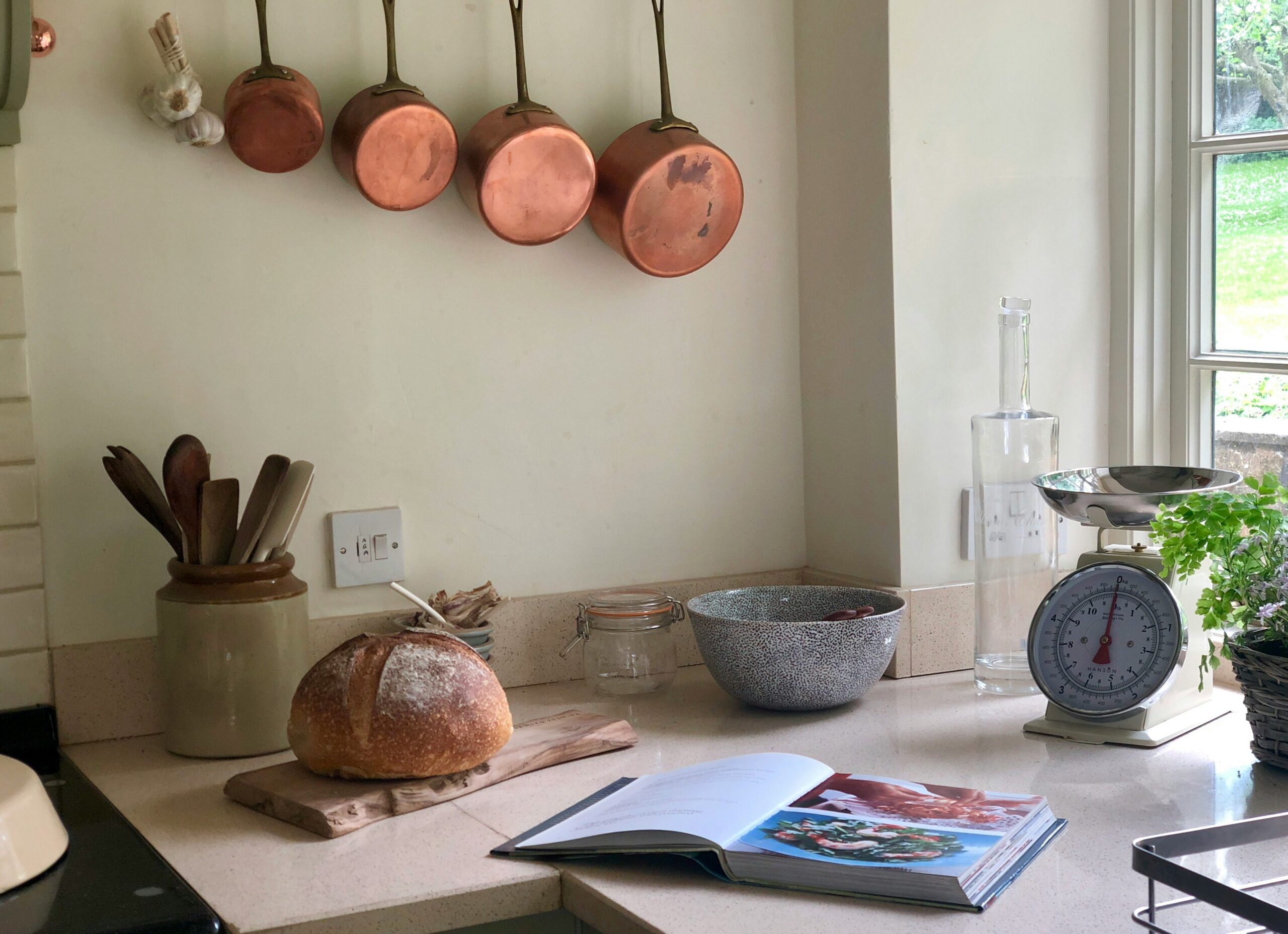
Photo by Cat Preston on Unsplash