Tune the Heart

MEGHAN PRUSSIA | GUEST I’ve recently been scouring the Scriptures for what the Bible has to say about the subject of fear, anxiety and worry. One of my favorite verses about the subject is Psalm 94:19 which says, “When the cares of my heart are many, your consolations cheer my soul.” This verse teaches us that the way to deal with our overwhelming thoughts is to overwhelm them with the consolations of the Lord. Recounting the blessings of the Lord in our lives stirs our hearts to gratitude. It’s one thing to say out loud that you're thankful. It’s an entirely different thing to actually be thankful.  As the holidays approach, I want nothing more than to be in a state of gratitude or thankfulness. I don’t want to be overwhelmed by my to-do list and miss out on the blessing of peace and joy that God has for me. I think we all want to be in that state. But how do we get there? In Psalm 103 King David teaches us what to do. First, he instructs us to preach to ourselves despite how we feel, knowing our physical circumstances may not change. Finally, he teaches us to meditate with the end goal of praise to God and renewal of our inner being....
Tune the Heart2026-11-17T14:10:49+00:00

The Two Prodigals: A Thanksgiving Reflection

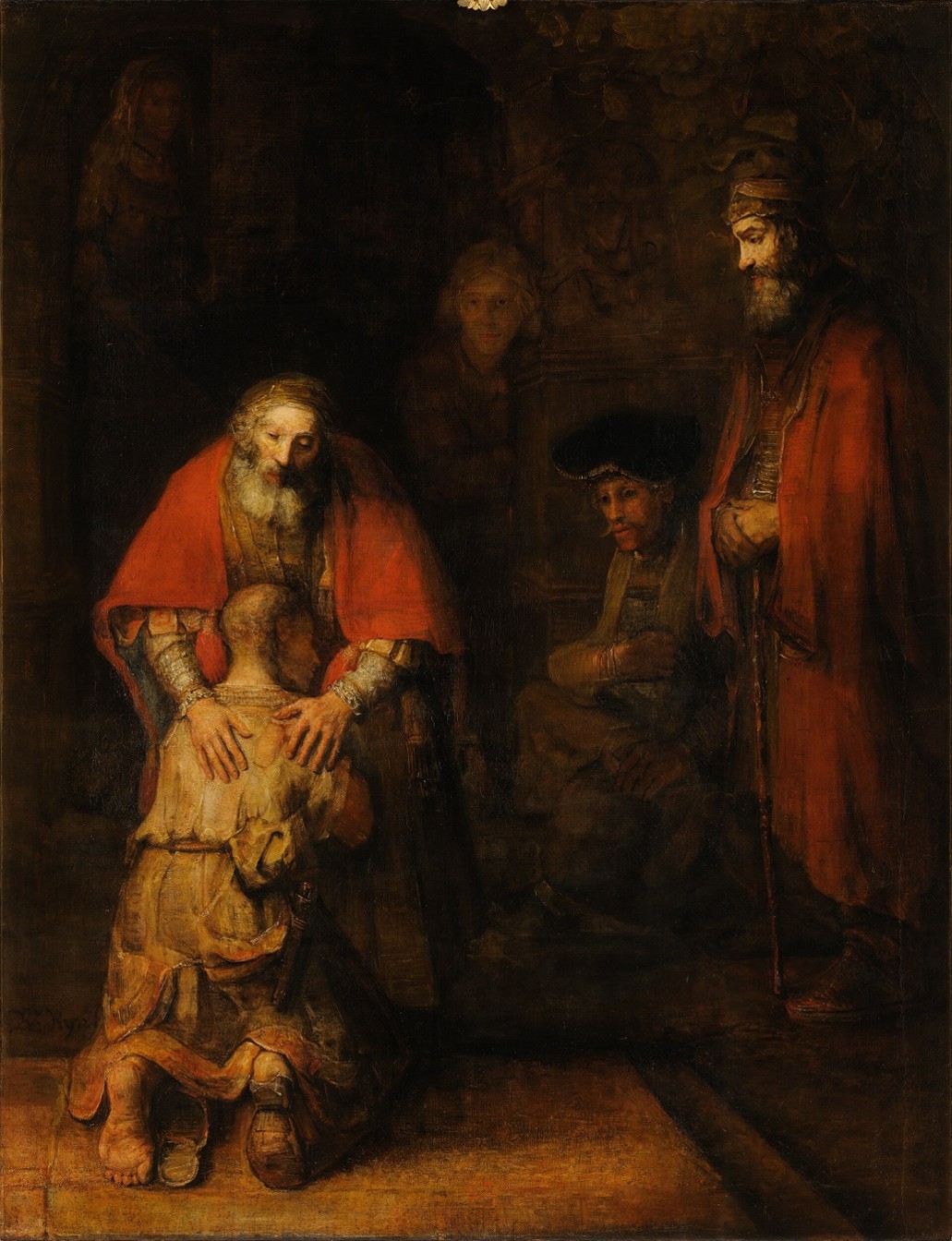
REBEKAH COCHELL | GUEST *Rembrandt Van Rijn, The Return of the Prodigal Son, 1663-1665, The Hermitage, St. Petersburg As we approach Thanksgiving, I want to ask you two questions: What are you most grateful for? And what has been the greatest obstacle to your gratitude? One painting has caused me to reflect on these questions. It is not a traditional Thanksgiving painting or a scene of abundance and plenty. It is The Return of the Prodigal Son by Rembrandt (1663-1665). The painting reminds me of God's grace, mercy, and forgiveness through Christ. But it also reveals something surprising: gratitude is often lost not through suffering or lack, but through pride, comparison, and a sense of entitlement. Let us begin by looking closely at the painting itself. I teach my students that before analyzing artwork, they must practice "slow looking." They need to notice details and take time to absorb the visual image. At first, there is no judgment or interpretation, only observation. This can be difficult when viewing a familiar story because we naturally want to assign meaning and make assumptions. Here is a brief version of what I see: This painting depicts six figures, although three are nearly lost in the shadows. They quietly observe the scene unfolding before them. A fourth figure stands prominently to the left, wearing a red cloak and an elaborate turban. These figures direct their attention toward the final two figures embracing....

The Two Prodigals: A Thanksgiving Reflection2026-11-12T18:14:09+00:00

The Art of Thankfulness

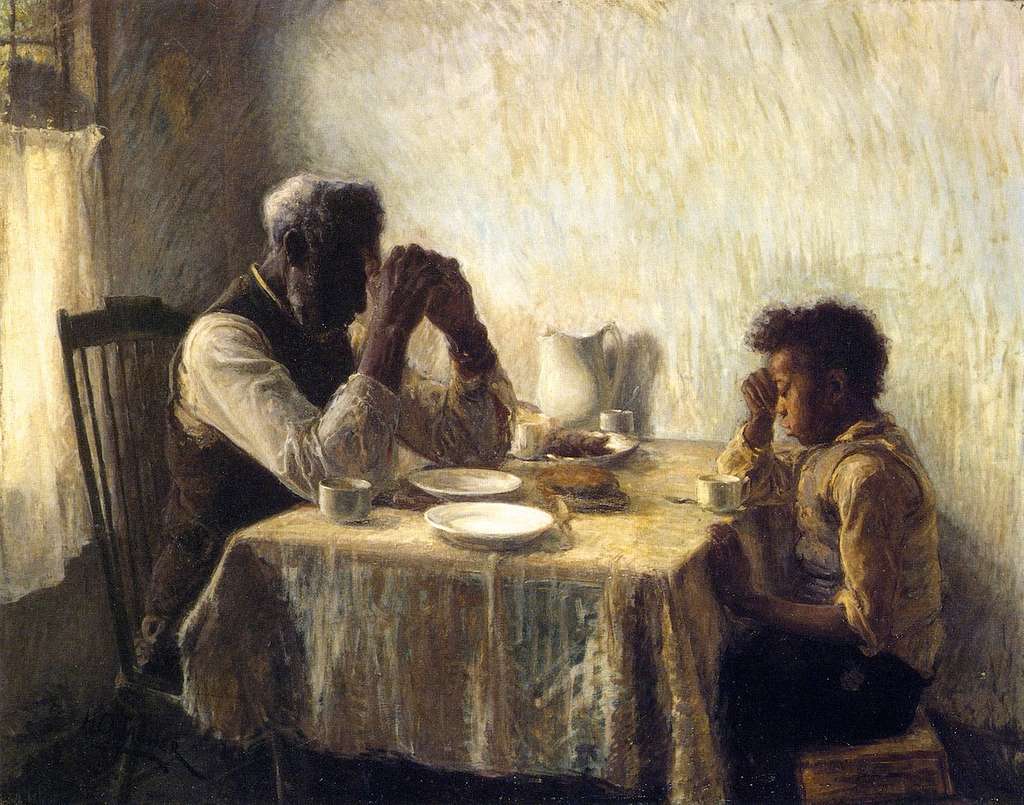
REBEKAH COCHELL | GUEST Henry Ossawa Tanner, The Thankful Poor,1894, Art Bridges Foundation currently exhibited at the Memphis Brooks Museum of Art. “Do not be anxious about anything, but in everything by prayer and supplication with thanksgiving let your requests be made known to God.  And the peace of God, which surpasses all understanding, will guard your hearts and your minds in Christ Jesus.” Philippians 4:6-7 Art can reveal truth, beauty, and goodness by depicting the spiritual transcendence of everyday life. “The Thankful Poor” by Henry Ossawa Tanner reveals a humbling lesson in thankfulness instead of merely offering us a depiction of the harsh realities of the late 1800s. Thanksgiving Reflected in Art Henry Ossawa Tanner was an artist born in Philadelphia in 1859. His experiences as a Black artist, during the Reconstruction and the Industrial Revolution in America, and in France shaped him as a Christian and an artist. He was a follower of Christ and painted many biblical narratives. He didn’t limit his Christian lens to just biblical paintings. His everyday “genre” scenes were imbued with deep emotional and spiritual depth, as well. As we look at this painting, we see an elderly man with graying hair and a young boy sitting at a table. The table is set simply, white dishes, cups, and pitcher with a modest meal, on top of a creamy yellow cloth tablecloth. The walls are bare and plain white. But the light from the window filtered through white curtains fills the room and all in it with an ethereal glow. The elderly man’s hands are clasped, eyes closed, and head bowed in a posture of reverent prayer. The young boy’s eyes are closed and head bowed, resting on one hand. His posture is a little less formal, as his left hand rests on the edge of the table. Their clothing, simple yet sophisticated, depicting care. The scene is reminiscent of a Vermeer; quiet, still, a moment in time that is transcendent. The window light illuminates the interior space. The simple white jug, an essential everyday item, represents life giving properties.  Like Vermeer, Tanner depicts those who labor, rather than those in positions of power. He is telling a story. But the story is not defined; we don’t know who the man and boy are other than what we can observe in the image and know from history. The title of the painting lets us know they are poor. The room, the table, and the meal confirm this. We know from history that the Reconstruction and the following Gilded Age, when this was painted, did not result in wealth for the Black community. It did not end racial discrimination. Tanner himself, though extremely talented, faced discrimination. His paintings would be shown in “separate” exhibits since he was not White. He left America to pursue his art career in Paris, where he was recognized and his talent celebrated.   While we can and should lament the past, Tanner rose above it, and above those who mistreated him. He did not wallow in the injustice but used it to paint truth as in this painting where he depicts the dignity and worth of the old man and young boy, created in the Imago Dei...

The Art of Thankfulness2025-11-05T19:36:31+00:00

The Antidote to Unmet Expectations this Thanksgiving

KERRY ANDERSON | GUEST So, it seems once again, just like all previous years, November follows October, and the holiday season is upon us. Let the planning and preparations begin—even though it was 80 degrees the other day where I live. In my current season of life, this preparation looks like coordinating dates and schedules with my married children and the teen still at home to see when we can be together. It also looks like starting the digital gift wish lists, making sure we have enough guest towels, and even revisiting traditions, recipes, and events to make sure they still suit everyone. My excitement grows with the planning, but so do my Hallmark movie-like expectations for every moment from now until New Year’s Day. Can’t you just see us all snuggled up in our matching pajamas? (Unmet) Expectations Because the holiday season often revolves around traditions, it’s good and reasonable to have certain expectations for how the days will go. If we’ve always run a Turkey Trot and eaten at 3 p.m. with chocolate pie for dessert, it makes sense our minds and hearts go there. If it’s been 30 years of the same prayer around the same table with Grandma Jane’s famous yeast rolls, of course we crave the delight and comfort in that. The Bible is full of examples of celebrations and feasts and remembrances that look the same each year (Lev. 23:33ff; Neh. 8:13ff; Job 1:4-5) so God’s people are stirred to fellowship, remember, and give thanks. This is good. However, life and the scriptures have also taught us that though we chart a course, the Lord is the one who determines our steps...

The Antidote to Unmet Expectations this Thanksgiving2025-10-25T14:02:28+00:00

Pastor Appreciation Month: Creative Ways to Show Your Gratitude

BETHANY BELUE | CONTRIBUTOR “I’m so glad I live in a world where there are Octobers!” Anne of Anne of Green Gables gleefully made this statement as the season changed on beautiful Prince Edward Island in the iconic 1980s movie. Although it might be remembered as a funny statement from a silly adolescent girl in a movie, I don’t think Anne is alone in her sentiments about the month. October is a month that many anticipate with cooler temperatures, pumpkin patches, changing leaves, and the cozy feeling that comes with a new season. Although there is much to anticipate about this month, there is something in our churches that we also have the opportunity to celebrate. October has long been known in the local church as “Pastor Appreciation Month.”     I grew up with my dad as my pastor. I remember every October, when Pastor Appreciation Month rolled around, a few of the ruling elders would come to the front and take a few minutes of the service to show appreciation to my dad. I have memories as a young girl of them recognizing him as their pastor and leader of our church. It wasn’t that my dad wasn’t thanked or celebrated at other times in the year, but I have very specific memories of October being set aside as special. My dad is now retired, but when October rolls around each year, I’m reminded of those memories and often think about how it impacted him and our family.   Pastors play a lot of roles in a church. They prepare weekly to preach God’s Word to the congregation (sometimes multiple times). They shepherd the hearts of the congregants. They counsel hard situations in people's lives. They reach out to the community to connect with those outside the church. They also often complete many administrative tasks that are very rarely known or seen. The role of a pastor is not 8-5, but can often include early mornings and late nights, interrupted meals, and missed bedtimes with children. But my guess is if you asked your pastor why he signed up for the role, he would say something to the effect of “because God called me to it.” My husband is the assistant pastor at our church, and there have been times I have asked him during hard weeks, “Do you think you want to keep doing this?” Even on the hardest days, his response is always a yes!—not because it’s easy, but because he knows the Lord has called him to this role and the Lord is using him!... 

Pastor Appreciation Month: Creative Ways to Show Your Gratitude2025-10-03T20:08:41+00:00

Growth in Prayer and Gratitude

MEGAN JUNG|GUEST “We always thank God, the Father of our Lord Jesus Christ, when we pray for you” Colossians 1:3). For 20 years, I’ve heard the same refrain. “I know I need to pray more...” “I know I should be grateful, but…” Regardless of location: my counseling office, a coffee shop on a college campus, or my seminary office, I have seen the exhausted, downcast, guilty expressions accompanying these words. I feel it too. I understand the tension about prayer and gratitude: I know what I need to do, and I don’t know how. Longing for gratitude and a robust prayer life is often coupled with frustration and uncertainty about how to change. Many of us feel like something stands between us, prayer, and gratitude. Some of us feel like we’re living a cosmic game of Tetris, trying to place spiritual disciplines between waking hours and a billion tasks. Not to mention a desperate need for rest. Some of us are embarrassed because we don’t feel like we have the right words. Others have pain, anger, or mistrust standing between us and the Lord. And if we’re honest, even the most mature Christians sometimes offer rote prayer and gratitude that feels boring and disengaged. (If you find yourself bathed in the mercy of a consistent, rich, grateful prayer life, we praise the Lord for His goodness to you! Please share with others how the Lord has brought you to this place. Sister, we need your witness and encouragement.) The Necessity of Prayer and Gratitude...

Growth in Prayer and Gratitude2025-07-09T18:29:38+00:00

A Song of Thanksgiving

SHARON ROCKWELL | CONTRIBUTOR Folk songs tell us stories in musical form. The Smithsonian offers a collection called “Classical Folk Songs for Kids.” The recordings are songs that I remember my parents singing, and now I sing them to my grandchildren (they are all too young to notice I cannot carry a tune!). Who does not remember the words to “Big Rock Candy Mountain” and “Puff the Magic Dragon?” Hymns tell us stories as well. “A Mighty Fortress Is Our God,” based on Psalm 46, relates the attributes of God and records His mighty deeds. “Come Thou Fount of Every Blessing” tells the story from 1 Samuel 7:12 where, after God gave the Philistines over to the Israelites, Samuel set up a stone called an Ebeneezer to commemorate the spot where “Till now the Lord has helped us.” The hymn hits the hearts of everyone who has ever felt God’s redeeming love. A Thanksgiving Song The first song recorded in the Bible is one of thanksgiving (Ex 15:1-21). Moses sang it when the Lord saved Israel from the hands of the Egyptians and from Pharaoh, with his host of warriors. After the final plague God brought on Pharaoh, the killing of the firstborn of Egypt including even Pharaoh’s own, Pharaoh reacted by finally relenting and letting the Israelites go. The Israelites’ firstborn were protected by the blood of the lambs painted on their doorposts. In anger, Pharaoh changed his mind and pursued the Israelites, intending to slaughter them before reaching the Red Sea. But God made a path through the Red Sea for His people, and when Pharaoh followed, the water surged around him and his chariots, destroying every last one. The Israelites witnessed the great power of the Lord and saw the Egyptians dead on the shore. With that, the Israelites “feared the Lord, and they believed in the Lord and in his servant Moses” (Ex. 14:31). Moses’ response was to give God the glory and lead the people of Israel in a victory song. The Lord had demonstrated His faithfulness in a grand and glorious manner, saving the people of Israel. Selected verses from Moses’ song can provide a template for our own songs this Thanksgiving...

A Song of Thanksgiving2024-11-11T20:02:13+00:00

Give Thanks

LAURINDA WALLACE |GUEST The table is set perfectly—for the moment, serving dishes line the kitchen counters, and all is ready for the annual feast. Aromas of turkey, stuffing, sweet potatoes, and fresh bread drift throughout the house as everyone anticipates the call to the table. Your clock management for the Thanksgiving feast seems just as crucial as it is for the NFL coach with thirty seconds left in the game, and his team is down by one point. When everyone is finally seated, you relax while watching your family fill their plates. However, for all the preparation and cooking, Thanksgiving Day is quickly over. In the busyness of cooking, the chaos of excited children, and too much pie, we may barely remember the prayers offered, and the gratitude family and friends shared around the table. Is the reason for this festive meal already in the rearview mirror? While our calendar proclaims one day in the year as Thanksgiving Day, as God’s people, every day is an opportunity to give thanks—not to an ambiguous universe, but to the God who made heaven and earth. Saving up gratitude to the Lord for one day a year certainly isn’t what Paul had in mind when he wrote to the Colossian church: And let the peace of Christ rule in your hearts, to which indeed you were called in one body. And be thankful (Col. 3:15). Thankfulness is the Christian’s way of life. The children of Israel had short memories of God’s faithfulness and care just after the miraculous parting of the Red Sea and their rescue from the Egyptian army. Their gratitude soon switched to complaints that there was no food, and then they didn’t like the manna the Lord sent. This was just the beginning of their grumbling. I’m certainly guilty of the same, quickly forgetting how the Lord answers my daily requests for safety and provision of needs, which was recently brought to my attention. Every day, I pray specifically for the Lord’s protection over my grandsons, two teenagers and three between the ages of three and six. A lot can happen in any young man’s or little boy’s day! In the last few weeks, two incidents with my grandsons could have ended in injury or worse, but the graciousness of God kept them from harm. I don’t want to forget those wonderful mercies, but how can I make sure they aren’t?...

Give Thanks2024-10-31T18:42:07+00:00

The Object of Our Thanksgiving

KERRY ANDERSON | GUEST Thank you note season is here. Though a waning tradition, I’m still a sucker for nice stationery, cute note cards, and handwritten thank you’s. And while we didn’t always nail the follow through (more than once I’ve found one of those unstamped, unmailed letters months later), we really did try to have our kids and ourselves write thank you notes for the gifts received on birthdays and holidays. The content was rarely substantial or original. Most started with the expected, “Dear Grandma, Thank you for the….” But, they were something. They acknowledged receipt of the gift and expressed gratitude for it. With pressing, my children would expand a bit more about the gift and its utility or their enthusiasm for it. It was progress in gratitude, at least in practice. But something was missing As I reflect now, generating enthusiasm for the gift falls short of the goal. Maybe rather than piling up attributes toward the thing received, perhaps the first two words of a thank you note are the ones that really matter. It’s the “Dear Grandma (or whoever),” the person opening and reading that note that is critical. We could all write lengthy, detailed thank you notes for gifts we receive, but if we don’t address and give them to someone, and the giver never actually sees or hears our words of thanks, our gratitude is lacking, empty, and misplaced. It becomes merely an advertisement for a product.         The Object of our Thanks A sermon on this from years ago stuck with me (bringing in grammar concepts always perks my ears up) when my pastor explained that our thanks must have an object. There must be a receiver (God) of our expressions of thanks. We aren’t to be just thankful for something we’ve received. We’re to be thankful TO God for giving it to us. As believers, the object of our thanksgiving is not the gift; it is the giver...

The Object of Our Thanksgiving2024-10-27T21:25:05+00:00

Fine Dining, the Titanic, and the Wrath of the Lamb

HEATHER MOLENDYK | CONTRIBUTOR If you were to observe my children while we discuss things like family vacations, clothing accessories, or entertainment activities, you would think their faces belong on posters for Compassion International. As many American families can attest, the current economic climate puts the squeeze on how far each dollar will go. In fact, a dollar usually needs to bring along a friend (or seven) in order to have any fun at the cash register. All that to say, when my husband was treated to a gift card for a posh restaurant, we were thrilled. As we parked our compact car between the luxury vehicles and navigated tables occupied by chic diners, my mood took a turn. I became about as delightful as a cat getting a belly rub during bath time. Excusing myself to wash up before lunch and to try to salvage my sour attitude, the Holy Spirit flicked me between the eyes and revealed the sin in my heart. I was coveting money. What is money? Money is a token that is traded for something that is needed or wanted. Its value is derived from the desire of another person to possess it. For example, if I need a gallon of milk and a box of cereal more than the five-dollar bill in my wallet, I will happily surrender my money to Walmart so that I can leave the store with items to feed my family breakfast. If my family desires to see the latest movie, we will eagerly put on a garage sale to trade some household goods for money to spend at the local movie theater. There have been times in history when money has absolutely no value to anyone. Remember the Titanic? As the ship was sinking into the dark, icy ocean, people of all levels of society were scrambling to climb into the lifeboats. Because there were not enough boats to save all the passengers, choices were made. In that sort of situation, no one in their right mind would have traded their seat on a lifeboat for any amount of money. Getting out of the lifeboat was a death sentence. Money would not save them...

Fine Dining, the Titanic, and the Wrath of the Lamb2023-12-01T14:41:45+00:00
Go to Top