
LEAH FARISH|GUEST
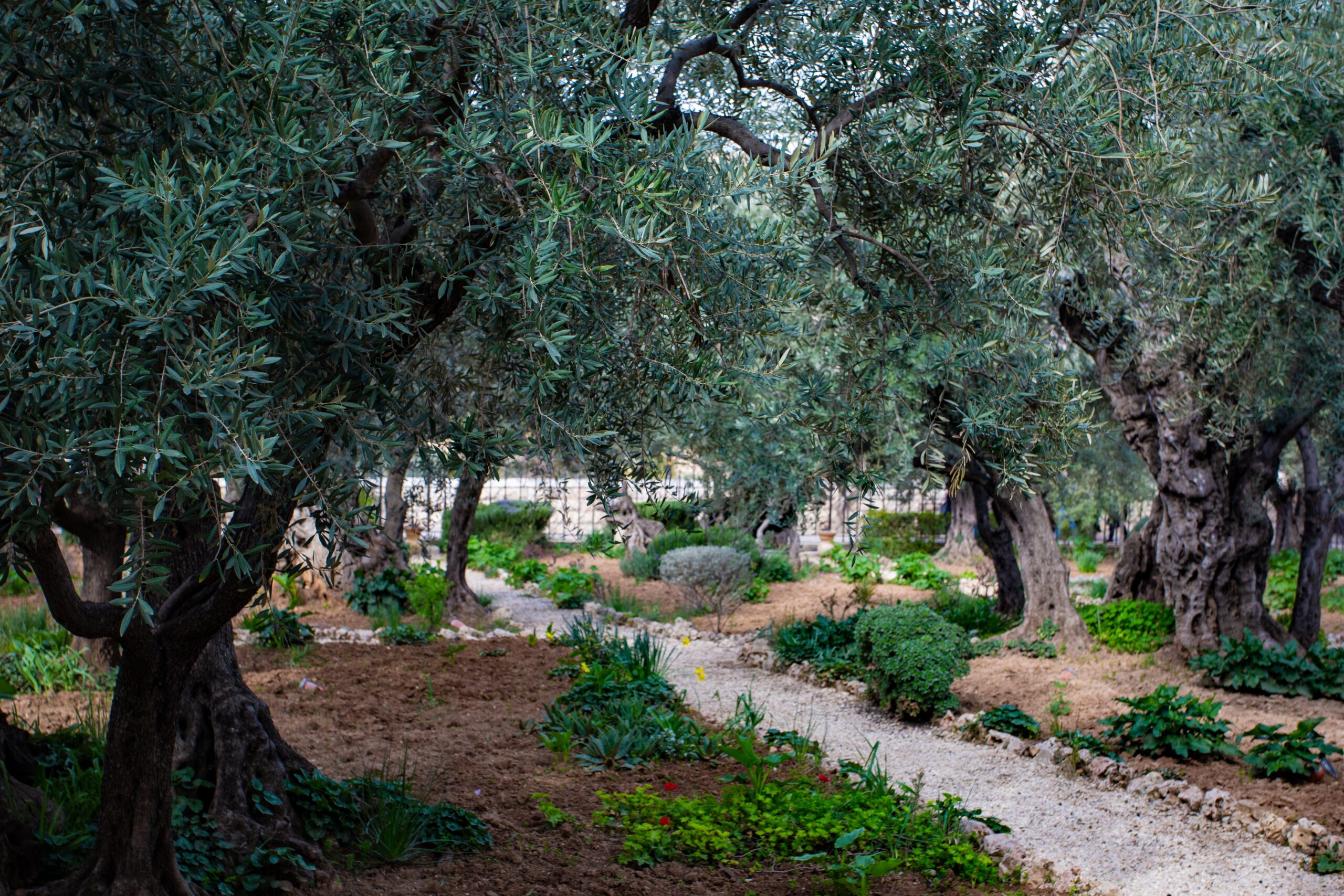
I grew up looking at a lugubrious, Victorian-era painting of Jesus in the Garden of Gethsemane. I knew that as He prayed there the night before His crucifixion, He sweated blood and asked that God “let this cup pass.” But somehow I was left with the idea that He was solely focused on His own upcoming suffering, perhaps doubting and fearing as He anticipated humiliation and torture. Lately, though, I have sensed that His anguish was for us, not so much for Himself.
His humanity surely dreaded torture and death. Sweating blood, He showed us the horror He felt as He contemplated His sacrifice. This makes His resolve that much more poignant.
Isaiah 50:6-7 prophesied it:
“I gave my back to those who strike,
and my cheeks to those who pull out the beard;
I hid not my face
from disgrace and spitting.
But the Lord God helps me;
therefore I have not been disgraced;
therefore I have set my face like a flint,
and I know that I shall not be put to shame.
Perfect love casts out fear; in His perfect love for us, fear did not deter Him. He was Truth; He wasn’t doubting. He must have acutely dreaded the next hours, but He wasn’t shrinking back; “for the joy that was set before Him He endured the cross, despising the shame” (Heb. 12:2). He knew He would be raised from the dead and vindicated (Isaiah 50:8, Psalm 22:29-31, Mark 8:31-2). But the church was just embarking on its path through a dark world, and that night in the garden He must have seen its weakness and vulnerability with heartbreaking clarity. He saw that the church would be on earth for centuries, in our puny flesh and faith “filling up what is lacking in Christ’s afflictions.”
His followers had proved themselves utterly unready to unite in witness, despite His warnings and exhortations.
He had just spent the evening with His disciples, sung a song with them, and walked with them to the Garden. Peter had sworn his undying loyalty to the Savior. It should have been a peak fellowship experience, cementing the circle.
On the contrary, the circle was already broken, and Jesus knew it. Peter’s stout pledge was empty. The disciples had looked askance at each other, suspecting each other of Judas’s betrayal. Then the disciples had started to quibble over who would be tops in the Kingdom. Judas had headed out to make treachery into a business deal.
Jesus had urged them two days before to “stay awake—for you do not know when the master of the house will come, in the evening, or at midnight, or when the rooster crows, or in the morning—Mark 13:35-6 [lest the master] find you sleeping.” He exhorts them again on the night of His capture to stay awake, but repeatedly finds them snoring while He is in agonies of surrendering prayer. Can you imagine leaving an urgent board meeting, and coming back and finding everyone snoozing around the table? He may well have felt that more days were needed with them to leave a firm foundation. This was the Bride He was planning to present to His Father, pure and spotless? Surely it wasn’t time yet to leave her. But the Father’s clear answer was no; the hour had come.
The church would suffer in the future.
Ironically, while His friends napped, His enemies were busy. They had assembled the Temple guard to tramp through the Passover darkness and find their target. And He must have been aware of it. He hadn’t asked the disciples to stay alert to warn Him of dangers; He wanted them to pray so they would not enter temptation—for their own good. It is beautiful that it was He who alerted them to get up and head out to meet their adversaries. This spared them from later thinking their failure had caused His arrest. It also made clear that He was willingly facing His accusers. He was in control of the whole process of laying down His life.
As His sweat turned to blood in the Garden, His unselfish nature of pure love was not changed—His agony was not doubt, self-pity, or fear of pain. He was wracked with sadness, much of it for us. Christ could see the damage we would do to each other with our sin. He looked into the abyss of confusion we would endure serving an unseen God, seemingly defeated at the cross. We would hurt when we were strong in our faith, we would hurt when weak in our faith. He would feel the centrifugal force of estrangement and blame from the despair we felt over the cross—how the sheep would be scattered when the Shepherd was struck. He counted the cost we would pay to bear His name –”afflictions, hardships, calamities, beatings, imprisonments, riots, labors, sleepless nights, hunger,” and more (2 Corinthians 6:4-5). His great heart knew that our flesh is weak and that, in the people of God, joy oscillates with grief, temptation, and distraction. I believe His compassion swelled His heart almost to bursting.
Alone, He entered into our curse.
R.C. Sproul in his sermon of Gethsemane says, “What was in that cup?…It was the curse of God. It was the wrath of God” (“Jesus at Gethsemane,” Ligonier Ministries, 2024). To be our priest, our propitiation, He had to see what He was taking on. He saw not just the sin and weakness we would experience, but also the wrath of God against every failure and transgression. The curse had been richly earned starting with Adam and Eve, compounding with each stained and selfish descendant. Christ very deliberately became all of that sin for us—He who knew no sin (2 Cor. 5:21). He entered into the human condition more deeply than any of us has ever dared to do. As Stephen would die in a few weeks as the first martyr, he saw a glorious heaven opening before him. I shudder to think of what Jesus saw in His last hours. And yet He stepped onward.
As our Lord drew most fully into the misery of humanity, He was outwardly most alone. The only crowds around Him His last few hours were there to accuse, mock, and torture. As a lawyer, I sorrow over His aloneness as He stood before authorities with no advocate but His misunderstood record, His misconstrued silence, His infuriating posture of humility. His friends and family were nowhere to be found, having other things more important, more self-protective, to do.
It’s no use to think, “I wouldn’t have left Him.” We all would have. So what do we do with this astonishing and convicting fact? Humble ourselves. Praise His goodness. Try to embrace, for moments in your day, His unselfishness. “Christ also suffered for you, leaving you an example, so that you might follow in his steps” (1 Peter 2:21).
Photo by Stacey Franco on Unsplash

Leah Farish
Leah Farish is host of the podcast, Conversation Balloons, on all the main platforms, and is active at Christ Presbyterian in Tulsa. She can be reached at LeahFarish.com