
KC JONES | GUEST
Some of us are old enough to remember Michael W. Smith’s popular song, “Above All.” Smith’s soft, mellifluous tones, coupled with his worship of God made for easy listening on the ears and edified believers far and wide. While this is still true of many and has even moved into the realms of warm and fuzzy nostalgia, it wasn’t until hearing the song again recently that I stumbled across a core memory of mine; a simple conversation of a theological nature between my father and me regarding the song and the nature of our worship. It pertains to the refrain of the song,
Crucified, laid behind a stone
You lived to die, rejected and alone
Like a rose, trampled on the ground
You took the fall and thought of me
Above all
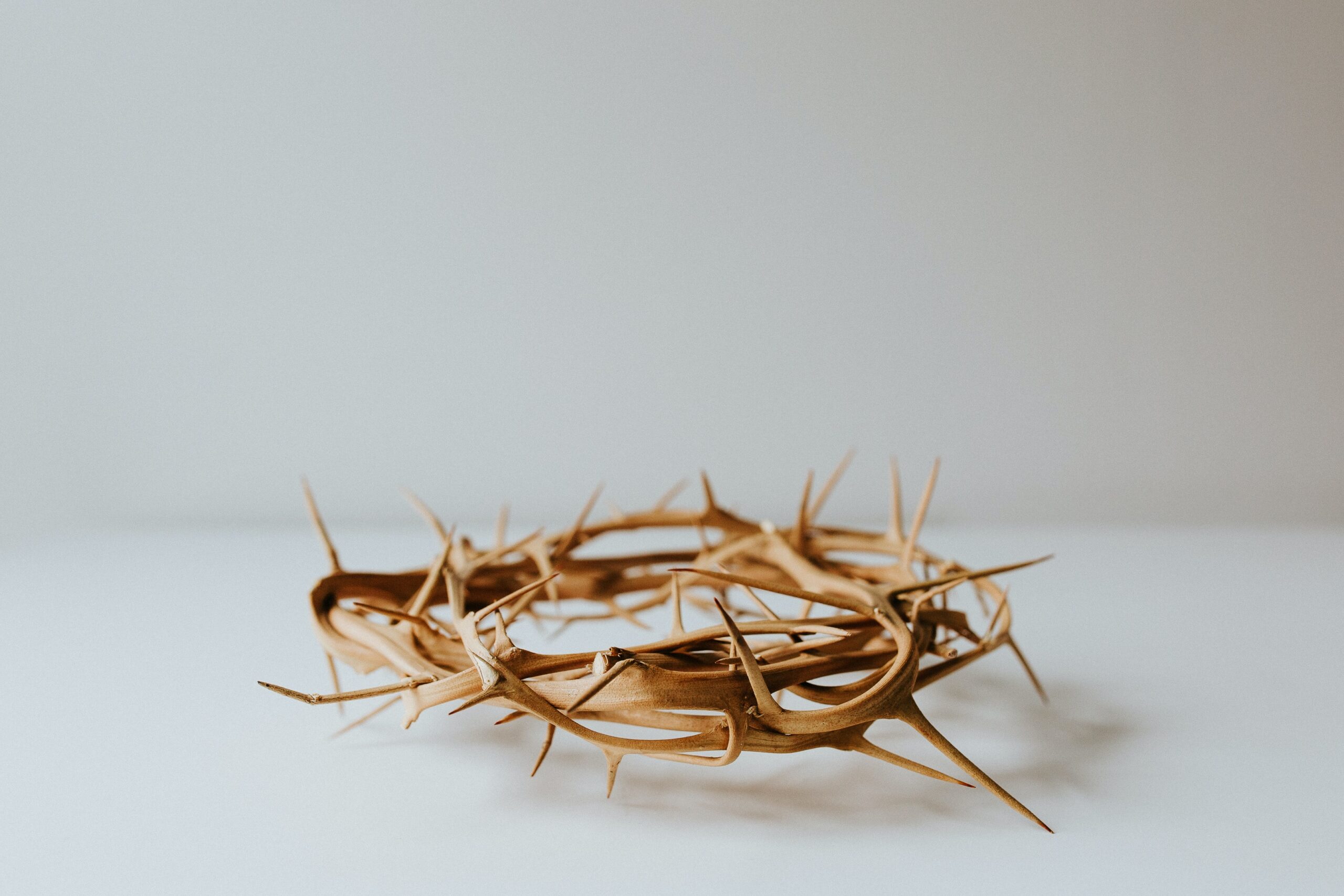
As I considered Jesus’ posture during His incarnation and even more specifically before and during His crucifixion, it was impressed upon me that Jesus’ chief consideration; His highest priority, as it were, was not of us, in fact, but of the Father Himself.
Seeking the Father’s Will
Even as a boy, when Jesus’ parents found Him teaching in the temple, His response was, “‘Why were you looking for me? Did you not know that I must be in my Father’s house?'” (Luke 2:49). From then the Scripture describes Jesus as growing in “wisdom and in favor with God and men” (vs.52). Countless times, He answers people by claiming to obey the will of the Father. In the Garden of Gethsemane before going to the cross, He begged that the Lord would take the cup of wrath from His hand, thus sparing Him from excruciating suffering and death on the cross. Yet He follows the same plea with, “…not my will but yours be done” (Luke 22:42). Again, on the cross when Jesus was at His most desperate, it was the Father on whom He fixed His gaze. He cried, ” ‘Eloi, Eloi, lema sabachthani?’” which means, ‘My God, my God, why have you forsaken me?'” Jesus’ pain was tantamount to Hell, because His Father had turned His back on His own Son, imagery which comes from an allusion to Psalm 22.
Jesus was consumed with the Father, not only because He was one with the Father, but because He knew that in His Father lay perfect love and fulfilment. Christ chose to die for man, yes, because He alone could save us. He alone desired to redeem His lost children so that He might set them free and adopt them into His kingdom, bringing them to dwell with the Father for all eternity. Yet, Jesus’ gaze was fixed on God the Father, not on man. He reminds us that, “‘I have come down from heaven, not to do my own will but the will of him who sent me'” (John 6:38). His purpose was to do the will of God the Father. As a result, we were the beneficiaries of His will, and therefore recipients of His overflowing love and grace.
For the Glory of God
When we consider why Christ came, why He even created man in the first place, let alone why He gave him a second chance, we have to come face to face with the understanding that God’s chief aim, His highest priority, and His sole focus is bringing glory to Himself. If this sounds odd to us it is because we may have become saturated with the notion that “the humble brag” or any brag for that matter is wrong, and we would be correct in that understanding. Yet, we are not God and thus, should not bring glory to ourselves, no, we should work to “glorify God and enjoy Him forever” (WCF,1) for that is what we were created to do. We have no cause to be proud or puffed up. Paul warns the Romans of this same problem, “For by the grace given to me I say to everyone among you not to think of himself more highly than he ought to think, but to think with sober judgment, each according to the measure of faith that God has assigned” (Rom. 12:3). As Christians, we are to be careful in what we worship, reserving all glory for Christ and allowing Him to raise us up according to His perfect will.
Not so, God. He is the only being deserving of all glory and majesty. He is King of kings and Lord of lords and thus cannot, should not, and will not bow the knee to any other. If He did so, He would not be worthy of our worship.
The Greeks and Romans played with this very concept in their mythologies by bringing deities down to their level either to better understand them or appease them. What they ended up with were stronger, and bigger humans, still fraught with all of the flaws, problems, and even weakness all people have. They were not gods to be feared with necessary reverence, but beings to be pitied and put up with. Yahweh, by contrast supersedes all others and will not nor should not share His crown with anyone.
He took the fall because of His desire to glorify the Father, thus making us heirs of salvation and His beloved children. He chose to create man in His own image, knowing they would defy and reject Him despite His plan of salvation to sacrifice Himself and save them once and for all. Because of His great love for us, not because of who we are, but because of who He is, God became an atonement for our sin. In John’s gospel, Jesus explains to His disciples, “No one takes [my life] from me, but I lay it down of my own accord. I have authority to lay it down, and I have authority to take it up again. This charge I have received from my Father’” (John 6:38). Christ’s whole focus, the entirety of His mission was fueled by His desire to do the will of God. It was God of whom He thought above all, and so we can rejoice because He did!
Photo by Christi Marcheschi on Unsplash

KC Jones
KC is servant to God, wife to Baskin, and homeschool mother to four children. She is passionate about speaking, writing, and teaching, and zealous in her desire to encourage women to use their gifts for the glory of God. She is a member of Redeemer Church in Jackson, MS. where she is privileged to serve on the Women’s Ministry Team and lead Bible studies and Sunday School classes for women with a focus on Biblical literacy. In an effort to combine two of her favorite hobbies, KC is often spotted running to her favorite local bookstore. When not directly serving in the life of the Church, KC and her husband tend to their community garden, read-aloud to one another, and laugh at the many shenanigans their children get up to each day.