
CHRISTINE GORDON | CONTRIBUTOR
Most believers I know don’t regularly quote from Haggai or hang verses from Malachi on their bathroom mirror to be memorized while brushing their teeth. And yet these books sit in the Bible just like Romans or Genesis, important enough to claim a spot in God’s Word. I read through them last year in my annual whirlwind tour of the Bible. And honestly, I didn’t understand much more about them when I was finished reading than I did before I started. With phrases like, “Zerubbabel the son of Shealtiel” and “I have loved Jacob but Esau I have hated,” these books seemed a little bit like fossils I didn’t have the tools to excavate.
But then I began to study them. Turns out, they’re relevant.
Wrong Priorities
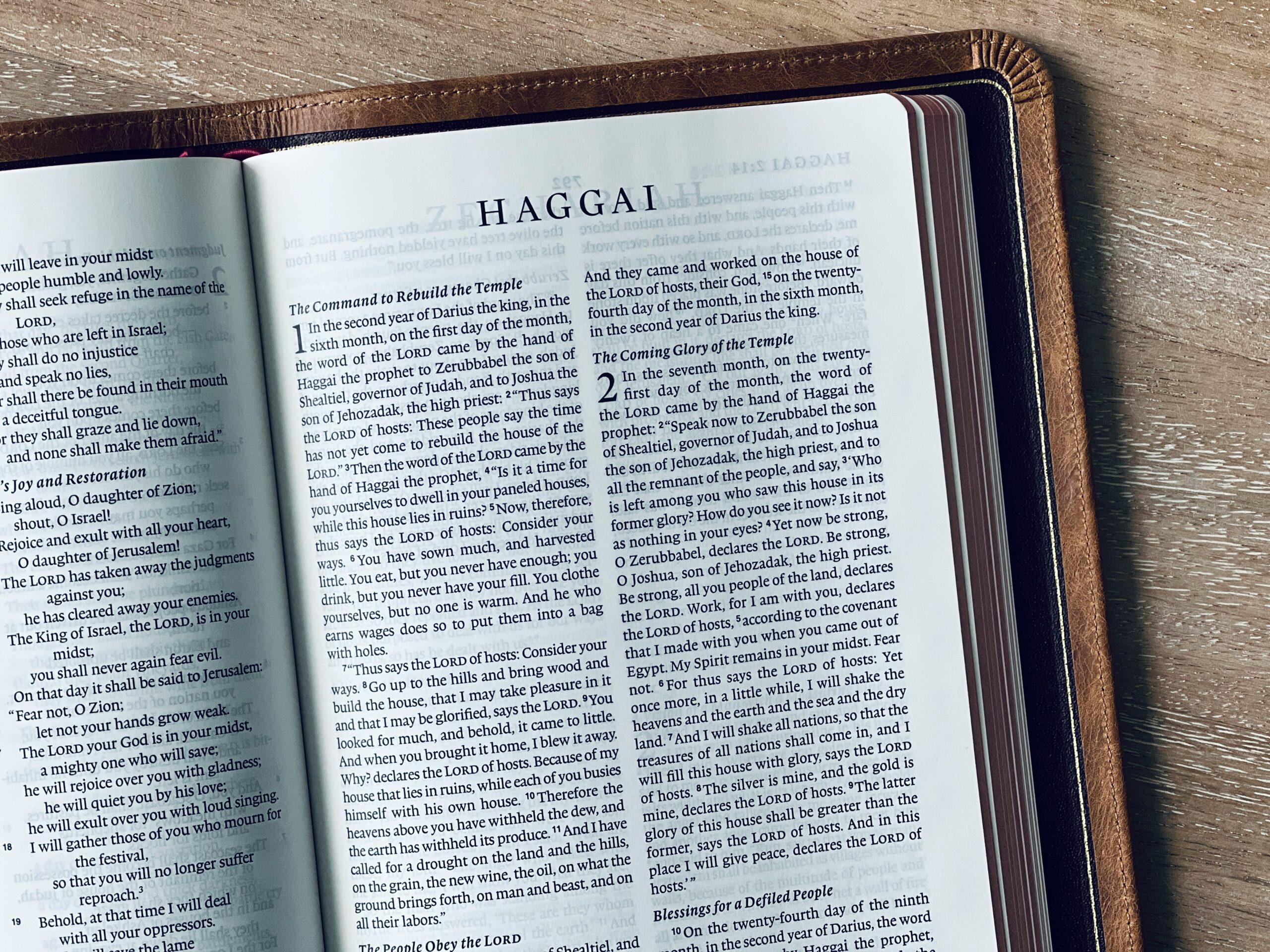
Once I got past the strange names and read some explanation of their context, I found myself relating to God’s people in these books. In Haggai, the people of Judah had gotten their priorities messed up. God called them to rebuild His house, but they were too caught up in their own personal house beautification projects to build the temple. It took God calling out their sin to get their attention. They knew what they were supposed to be doing but were apathetic/too busy/preoccupied. God named their failure. But instead of leaving them in shame, He then promised to be with them as they worked. He stirred their spirits, rousing them to obedience. God’s people built His temple and again had the privilege of coming close to the “God of angel armies” as He’s frequently called in Haggai.
We haven’t been called to build God’s physical temple. Instead of needing a building to be near God, God has come near to us in the person of Jesus. By His Spirit, we enjoy His constant presence. But we have been called to build His kingdom so that others might also know His presence and worship Him. We know this, but struggle to put God’s kingdom first. Between children’s doctor appointments, Amazon returns, and work responsibilities, it’s easy for us to have our priorities mixed up like the people of Haggai’s day. The kingdom of God sometimes becomes something we set to the side. We put off the things of God until we feel more settled in all the other parts of life. Giving financially, discipling others, and serving the body of Christ in other ways all take time and planning. We often give that time and attention to other things. We prioritize our own desires and decide we’ll get to God’s kingdom later. We get distracted by all kinds of things – even good things. Weeks or months can pass before we realize God’s kingdom and His call to invest in it has been put aside.
But God doesn’t put His people aside.
God’s Covenant Faithfulness
Our forgetfulness, apathy, and hard heartedness don’t stop God from loving us. Neither do they exclude us from being used in the work of His kingdom. God convicted His people in Haggai’s day, explaining that their terrible yields in the wheat fields and on the grape vines were His doing. He got their attention with difficulty and suffering that eventually brought them back to Him. He promised to be with them. He stirred their hearts with willingness and enabled them to work. He blessed them, promising bumper crops instead of the emptiness and hunger they’d been experiencing. He promised to fight for them and work His future glory through them. When His people de-prioritized God, He still prioritized them.
Finding Jesus in Haggai
Haggai ends with these words in 2:23, “I will take you, O Zerubbabel my servant, the son of Shealtiel, declares the Lord, and make you like a signet ring, for I have chosen you, declares the Lord of hosts.” Instead of taking the work of His kingdom away from the people of Israel for their failure to obey, God was promising to include and use them. Zerubbabel, a great-great-great grandson of David, would be used like a king uses a signet ring. A great king of Zerubbabel’s time would seal a legal document with his signet ring, pressing the unique image of his ring into the soft wax that sealed his letter, displaying his authority to any who received the letter. God was promising to use Zerubbabel as His own signet ring, a sign of God’s power and authority. Five hundred years later, the name “Zerubbabel” shows up in Luke’s genealogy of Jesus. This list of relatives begins with Jesus and continues back in time until it reaches Luke 3:27 which reads, “the son of Joanan, the son of Rhesa, the son of Zerubbabel, the son of Shealtiel…”
Out of a distracted, apathetic group of God’s people living in 5th century BC came a line of people which led to Jesus himself. From this little outpost of Israel God brought one greater than the temple. Jesus, even while living under the oppression of Rome, the imperfect parenting of Joseph and Mary, and in the finite, fragile body of a human, never got His priorities mixed up. He didn’t put God’s kingdom aside as He set His face toward Jerusalem and walked straight toward His cross. Jesus endured the shame of crucifixion for the joy set before Him—His people—you. And on that cross, He paid for all your distraction, mixed up priorities, and failure to put His kingdom first.
See what I mean? Relevant. I wouldn’t have guessed it. But there were treasures buried in the book of Haggai. Can you imagine what’s waiting for you in Malachi? Don’t be afraid of these mysterious little books. Study Bibles, commentaries, and helps abound today. Dare to pick up a tool and dig a little. What you’ll find is Jesus, robed in the clothes of the Old Testament.
Editor’s Note: At His Feet Studies recently released Haggai and Malachi. You can find it at their website here.
Photo by Tim Wildsmith on Unsplash

Christine Gordon
Christine B. Gordon, MATS, is wife to Michael and mother of three. She is the co-founder of At His Feet Studies and a visiting instructor at Covenant Theological Seminary. She loves to walk, make music with other people, and share bad puns with her family.