
The Life of Naomi and How Adversity Disguises God at Work

DEBORAH MCQUILKIN|GUEST My life as a Christian is not what I expected. In fact, at one point I said to God, “Is this worth it? Thirty years I have followed you as closely as possible, and this is how it turns out? Should I just leave you now? What is the point?” Shock and disappointment filled my heart and I wondered what my life meant. Then ever so gently Peter’s words in John 6:68 settled in my mind, “Where would I go? You have the words of life.” I knew God’s word is steadfast, timeless, and relevant, and the decision was made. In fact, that decision was made when I committed my life to Christ. I would not leave my Saviour, for God would never let go of me. However, I would need to work through my resentment toward God about my unmet expectations, for they created a barrier in my relationship with Him. Perhaps not unlike Naomi’s experience in the book of Ruth. On Expectations and the Life of Naomi When I reviewed the story of Naomi from Naomi’s perspective rather than Ruth’s in my study Naomi: Reason to Hope, it was a revelation in God’s truth for me. Don’t call me Naomi (pleasant), call me Mara (bitter) she says in Ruth 1. Her expectations were dashed, and she was bitter. She expected, as one of God’s covenant people, to experience personal peace and affluence. She wanted to be a wife and mother, with resources and an abundant life. Within ten years, all those expectations were crushed, she was left responsible for two daughters-in-law, and she felt she had no assets. “I went out full and I came back empty” she says. Had Naomi really come back empty? Had God abandoned her? Was God insufficient? Naomi’s perspective was not God’s perspective. Naomi looked at her immediate circumstances; God planned eternity and the salvation of all generations. Naomi was concerned with how she felt and what she wanted; God was concerned with the birth of the Saviour. Who would facilitate a godly line? Would Naomi cooperate with God in assuring the descendants of Salmon, Elimelech, and Boaz?  These men are ancestors to King David and in the lineage of the Lord Jesus! A study of Naomi in the book of Ruth demonstrated that life brings financial insecurity, loss, death, transitions, conflict, and drama. These are a part of life we don’t want to expect. We feel surprise or even shock when devastating events come. But there is hope: God is present, and He is good. May I repeat, God is good. In His love and sovereign control, God never fails to do good to and for us...


The Life of Naomi and How Adversity Disguises God at Work2023-03-24T18:12:41+00:00

Stewarding the Struggle

KAREN GRANT|GUEST The rough concrete scratched my toes as I focused on keeping my nose above water at the Fun in the Sun Club pool in Arlington, Texas. My goal that day was to touch the bottom. Water pooled in my ears and my hair swayed like seaweed in my eyes as I learned to hold and release my breath while flipping upside down to touch the bottom. Then I could swim toward the light. My parents applauded as I ventured into deeper and deeper water, opening my eyes to churning legs and feet, and watching my breath in measured bubbles. Discovering that less and less effort was required to break the surface, I began to trust air and water to do what they do. Where were you in the murky pool called the pandemic—that time of uncertainty, fear, and crisis? Were you upside down, attempting to avoid the churning chaos, swimming for the light before you ran out of breath, looking for cheer from someone, anyone out there? To gain perspective, we must somehow step outside of our own view. I believe the only healthy way to do that is to open God’s word to a relevant passage, engage with it, wring it out, cry into it, and ask questions until we get to the bottom. We submerge ourselves and trust Christ to do what He does when we engage with the living and active breath of God. We burst through the surface into His world, His thoughts, His reality, and it does what He does: it reveals areas where we must repent, restrains us from wrong, and sheds enough light for at least the next step. Stewarding Our Sorrows I remember the image of my pastor many years ago as he related the death of over ten friends or family within the span of a year. He and his wife were left empty; they could only be still and listen. They realized that stewardship is not only for money, gifts, and time, but also includes stewarding our sorrows. He held his hands out in the shape of a bowl before the congregation and told us that all he had to offer the Lord was ashes. This image continues to guide me as I’ve come to Jesus with my own offerings of ashes due to losses, severed relationships, and broken dreams, laying them at His feet and trusting Him to make them beautiful in His time. My question to Jesus in 2020-21 then became, “How can I steward this unto Your glory? Would you use me, and re-form me to bring comfort and encouragement to others?” He took me to Isaiah 12, and I was stunned. The truths in this chapter are clear for both its original and prophetic audiences, the covenant people of God. Gratitude, Opportunity, and Joy This is what I found: Our stewardship comes through gratitude, opportunity, and joy. Look at verses 1 and 2...

Stewarding the Struggle2023-03-24T18:13:47+00:00

Why Does Covenant Theology Matter?

HEATHER MOLENDYK|CONTRIBUTOR The air is thick with fear. Every time you step out of your house you see those worried glances flicking from face to face taking inventory of those wearing masks and those who do not. Social media is flooded with opinions and anecdotes regarding the decision to vaccinate or not. News coverage saturates our vision with death and violence and unrest. The world writhes under the pain of pollution, needless destruction, wanton waste, and never-ending selfishness. Comfort is the ultimate commodity, whereas life is easily disposable. There are no guarantees for tomorrow. The air is thick with fear. A broken beginning Adam crouches in the shadows. He unsuccessfully wills his frame to shrink smaller to avoid detection from the Holy God moving towards him in the garden. Adam’s heart pounds with the beat of trepidation while he hides in shame. Everything is wrong. “I heard the sound of you in the garden,” Adam admits to God, “and I was afraid” (Gen. 3:10). Adam has a right to be afraid. He has disobeyed and broken the one commandment the Lord God had given him: do not eat from the Tree of the Knowledge of Good and Evil. With the forbidden bite, comes a flood of consequences: shame, embarrassment, damaged relationships, hardships, and pain. The relationship with his creator is severed, and Adam is now destined to die. The air is thick with fear. Stepping into the destruction with the Covenant of Commencement Although Adam fully deserves to be dismissed and abandoned to his fate of judgement and death, God refuses to walk away. Instead, the Creator takes a step closer. Though this journey will cost the Creator His very son, God sets in motion a plan to hold onto the people He loves. God extends the promise of a Savior to destroy the snares of sin, fear, and death (Gen. 3:14-15). There is hope for God’s people in the Covenant of Commencement...

Why Does Covenant Theology Matter?2023-03-24T18:14:48+00:00

Grieving the Loss of a Baby? You Are Not Alone

LAURA BOOZ|GUEST The banquet room sparkled with excitement as waiters removed our dinner plates and topped off steaming cups of coffee. I reached toward the center of the table and selected a dish of chocolate mousse. I was attending a bloggers’ conference with hundreds of women from all over the country who loved the Lord and wanted to reach others through blogging. We networked with one another and attended sessions about how to write compelling content, attract readers, and manage the technical side of writing online. The room relaxed as we rearranged our chairs to enjoy a warm drink and listen to the evening keynote address. We applauded as Angie Smith made her way up to the stage. I couldn’t believe that she was speaking at this conference. I had just read I Will Carry You, a book Angie Smith wrote about carrying her baby, Audrey, to term, despite the doctor’s prognosis that her daughter wouldn’t live long after birth. Audrey did, in fact, die shortly after birth. The book is heartbreaking and helpful. Here was Angie, at the blogging conference that would keep me occupied as my baby’s due date came and went. I originally thought I would have to miss the conference because I would be in my hometown delivering a full-term baby, healthy and happy. But I had delivered my baby four months ago. She was stillborn. Earlier in the evening, I had introduced myself to Angie and told her how much her book meant to me. She listened intently, as if I were the only grieving mother in the world. She hugged me and looked in my eyes and asked, “What is your baby’s name?”...

Grieving the Loss of a Baby? You Are Not Alone2023-03-24T18:15:20+00:00

Letting Go of My Mother and Friend

PATSY KUIPERS|GUEST God blessed me with the gift of a godly mother, a blessing that would impact my life in innumerable ways over the six decades we shared. Raised as an only child after my baby sister passed away, my bond with Mom was strong and multi-faceted. She could be a firm disciplinarian, but she was also my best friend and closest confidant. When my 39-year-old husband, Ray, passed away suddenly, Mom and Dad moved to Georgia to help me and my then 7- and 10-year-old daughters navigate life without our beloved husband and father. In the ensuing 24 years, my daughters, son-in-law, and three grandchildren also benefitted from her selfless, unconditional love and unwavering faith. I couldn’t imagine life without her. As a child, I would sometimes hope we’d die together in an accident of some sort. Little did I know then that a day would come when I’d sit by her hospital bed and plead with the Lord to take her Home. But it did. Role Reversal Unlike my husband’s sudden, unexpected loss, I lost Mom bit by bit over the last few years of her life. Tiny but determined, she continued to take care of her home and loved ones even as arthritis and osteoporosis took a greater and greater toll on her physically. Then came some red-flag moments signaling a decline in her mental abilities— her request for help balancing her checkbook even though she’d worked in banking for years, the inability to successfully bake a cake she’d made countless times over 50 years. Those moments alarmed and saddened me. Gradually, our roles shifted as I assumed more caregiving activities. Mom would often tell others, “I don’t know what I’d do without Patsy. She’s the mother now.” Or she’d tell me, “Thank you for your help. I can’t ever repay you.” I’d remind her, every time, of the years she’d invested in my children and me, lavishing so much love and care on us, and that if we were keeping accounts, I’d be the one forever in her debt. Bound by love, we knew there was no record-keeping between us. Yet, there was a growing sense of sorrow as we experienced our changing roles and limits on what we could do together...

Letting Go of My Mother and Friend2023-03-24T18:15:27+00:00

Seasons of the Soul

PATSY KUIPERS|GUEST Editor's Note: The following is an adapted excerpt from Patsy Kuiper's new book, Be Still: Quiet Moments with God in my Garden. For everything there is a season, and a time for every matter under heaven: a time to be born, and a time to die; a time to plant, and a time to pluck up what is planted.  Ecclesiastes 3:1-2 Nature’s Seasons I once attended a presentation where the speaker began with, “Summer, fall, and winter are seasons – spring  is a miracle.” I’ve thought about her comment every spring since. Early warm spells begin to nudge plants from their slumber in January here in the South. Witchhazel, Lenten roses, and paperbush start the floral parade that continues for multiple weeks as plants take turns in the spotlight. Trees, flowers, baby birds – all embody the joyful message of rebirth, which in turn stimulates hope and rejuvenation in us. But spring gives way to summer, and tender ephemerals[1] disappear for another year as heat-loving specimens flourish.  Summer annuals and perennials bloom, then set and disperse their seeds before beginning their decline. Fall arrives. Crops are ripe for harvest, the fruit of spring planting and summer tending. Soon daylight hours decrease, as does the temperature, and autumnal leaves create a riotous display of color – one last hurrah before they let go and blanket the ground for the winter. Ah, winter. Based on my observations, I’ve concluded it is the most misunderstood, under-appreciated season, at least from a gardening standpoint. Those unfamiliar with the ways of plants scan the leafless, apparently lifeless landscape and pronounce, “everything’s dead.” I used to think that too, but my horticulture studies dissuaded me from that notion. For instance, some seeds won’t germinate without scarification,[2] and some bulbs won’t bloom without adequate chill time. Many plants depend on the decreased daylight and increased darkness that accompany winter to flower at the appropriate time. My newfound knowledge has given me a different perspective...

Seasons of the Soul2022-05-04T23:01:02+00:00

The Comfort of Covenant Theology

SARAH IVILL|CONTRIBUTOR One of the things I love to do is sing covenant theology with my children. We have CDs that put the First Catechism: Teaching Children Bible Truths to music, as well as CDs that put the Westminster Shorter Catechism to music. I love both! I have found that we learn the questions and answers better when we sing them. Not only do I love to hear my children sing these truths, I love to sing them too. Whether I’m singing the catechism while doing chores, or while homeschooling, the truths of covenant theology comfort me.    Perhaps comfort isn’t the first thing you think of when you hear “covenant theology.” Maybe you’re not even sure what covenant theology is, or if you do, maybe you aren’t confident in explaining it to others. I want to help you associate covenant theology with comfort, and hopefully be better able to teach it to others. We need comfort on a daily basis, and we don’t want to get it from the wrong sources, such as food, shopping, or media. We want to remember that the covenant-making and covenant-keeping God is with us in our physical pain. He is with us in that messy relationship. He is with us as we battle habitual sin. And He is with us as we engage in service.   Five Ways Covenant Theology is a Comfort Covenant theology is a comfort because it teaches us that God is the Creator and Redeemer who wants to be in a relationship with His people. He created us to glorify Him and enjoy Him forever, so our greatest satisfaction will always be found in Him. He could have chosen to relate to His people in any number of ways, but He chose to relate to us by way of covenant. We could not have initiated a relationship with God, but amazingly He initiated one with His people. This isn’t a relationship that can be broken; it’s binding. And this isn’t a relationship without structure. It’s grounded in His grace and promises. Furthermore, this isn’t a relationship without security. The blood of God’s Son, Jesus Christ, secures it. Covenant theology is a comfort because it teaches us the promise of God’s presence...

The Comfort of Covenant Theology2022-05-04T23:08:59+00:00

Waiting Beyond the Waiting

CHRISTINE GORDON|GUEST Much of 2020 was about waiting. Waiting to see how the virus will spread, waiting to see if the kids will go back to school, waiting to see if we’ll be able to go to church in person or if we’ll have to worship in our living rooms again. The church has just made its way through another year of advent, a time when we expect to wait. We mark it and celebrate it. But now the holidays have come and gone. And unlike new years in the past, the change in our calendars this time may feel more like a mockery than a fresh start. Instead of the new or different we had hoped for, we find ourselves waiting again, enduring. The other day I was half listening to the news on the radio as I drove when I heard this headline, “It is an historic day for a woman in Great Britain, who is the first person in the world to receive a vaccine for the Coronavirus.” I listened as the woman in her 90s expressed her surprise and delight, saying she was overwhelmed at the opportunity to be the first to be immunized. And then I started crying. Living in Hope Maybe it was her sweet British accent and the gratitude in her voice. But in my body I felt profound relief. Finally help was coming. Finally the hundreds and thousands of deaths would be slowed, the hospital admissions would go down, the children would play on playgrounds again without worrying about the distance between them. I knew none of these things would happen immediately, but suddenly there was a hope in my heart that felt like life and joy, energy and motivation. This locked down, lonely, mask-wearing, death-fearing existence might be our present reality. But it would not be our future. I do not now know the date when the world will go back to normal, whatever the new normal looks like. I do not have access to the name of the last person who will die from the Corona virus. I don’t know when my husband, who is diabetic and a heart attack survivor, will be vaccinated, therefore alleviating some of the anxiety my children and I carry every day. But because I know protection for him and all of us is coming, my outlook has begun to change. The ground beneath me seems to have shifted from a downward ramp toward the unknown and scary to an upward path of hope and possibility. I do not need to know specifics for my heart to begin to relax and believe that we might make it through. Is this not the experience of the Christian life? Even when we are fully on the other side of the pandemic, there will still be loss, grief, and tragedy....

Waiting Beyond the Waiting2022-05-04T23:40:14+00:00

The Red Carpet of God’s Faithfulness

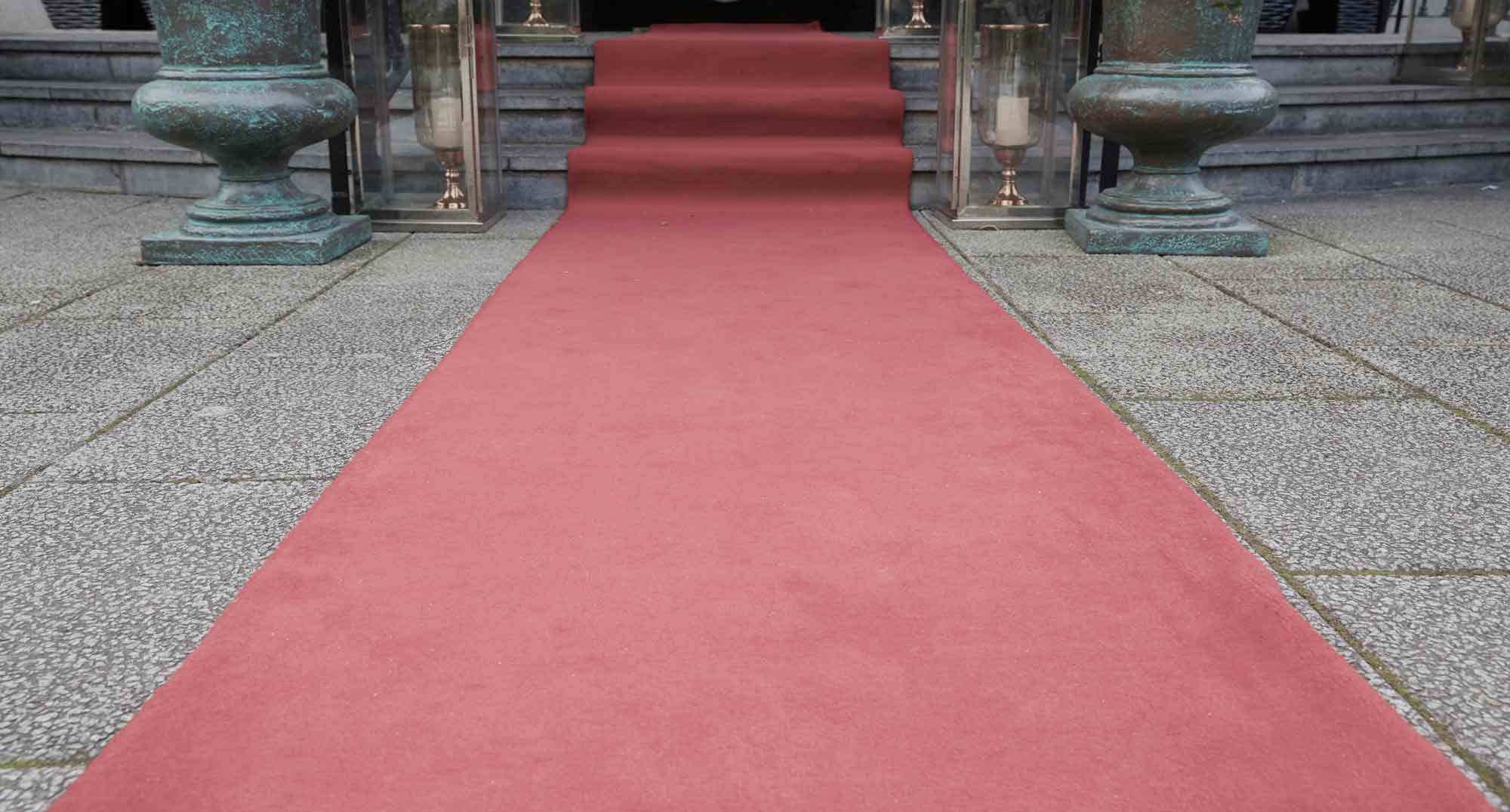
BETHANY BELUE|GUEST My grandmother was a librarian. Each time I visited her little white house she would have a new book waiting for me. From a young age she gave me a love of story, a love of diving into someone else's thoughts and words bringing adventure to life. To this day, I love getting lost in someone else’s story. I love those beginning chapters that set up the plot, the page-turning chapters when you don’t know what’s going to happen, and then the best part: when it all comes together to a satisfying conclusion. Recently, I’ve been challenged to think about my own story. What do I see in the twist and turns, the moments of not knowing what is going to happen next, and the parts that could be considered an adventure but don’t always make sense?   A Red Carpet of Faithfulness At 29, I was a single girl living in New York City, on the cusp of a big life decision. I’ll never forget sitting in a downtown Manhattan office building with a sweet friend seeking her advice on what I should do. I wanted her to tell me exactly what to do (or maybe what not to do). She was the type of friend who could be honest with me, but in a gentle way. To my surprise, instead of telling me what I should do, she began asking questions about my life. She asked me to recount different seasons of my life when I was unsure of what to do and what led me to take the next step. She sat there quietly, just listening, and then she said something that changed my life in a significant way. In her soft voice she said, “Bethany when I hear your story, it makes me think about a red carpet. As you look back on your life, you see the red carpet being rolled out for you. However, that red carpet isn’t a carpet at all, but God’s faithfulness in your life...

The Red Carpet of God’s Faithfulness2022-05-04T23:45:19+00:00

Looking at the Cross Through the Lens of Christmas: Hope for Excruciating Moments

ELIZABETH TURNAGE|CONTRIBUTOR Mary’s pain must have been excruciating. For how could a mother watch her son, the supposed Savior of the world, be crucified without feeling that agony herself? In the most excruciating moment of her life, what did Mary remember of the first Christmas, and how did it give her hope? In the most excruciating moments of our lives, what can we remember, and how can those memories give us hope? As the frenzied crowd shouted around her, “Crucify him!” did she remember a night over thirty years ago? Into the quiet of that night, the bright and fearsome angel Gabriel had burst with a troubling announcement, “You will conceive in your womb and bear a son, and you shall call his name Jesus” (Luke 1:31). As Pilate sentenced Jesus to death by crucifixion, did she remember how she and her cousin Elizabeth had celebrated Gabriel’s announcement and the early days of their pregnancies together? As Pilate scrawled out the word “King of the Jews” on a makeshift sign, did she remember the angel’s words, “…and he will reign over the house of Jacob forever, and of his kingdom there will be no end” (Luke 1:33)? As she watched the life leak out of Jesus, did she wonder how a dying king could reign forever? Did she remember Gabriel’s assurance, “For nothing will be impossible with God” (Luke 1:37)? Did she remember how easily she had surrendered to God’s plan, voicing her faith, “Behold, I am the servant of the Lord; let it be to me according to your word” (Luke 1:38)? As the Roman soldiers ripped her son’s clothes, did she remember swaddling Jesus in a soft cloth the night she gave birth to him in the stable, because there was “no room for them in the inn” (Luke 2:27)? As Jesus called to her from the cross, “Woman, behold your son,” and pointed to his beloved disciple, John, did she remember gazing into the shining dark eyes of her newborn son, the Savior of the world? As she heard Jesus cry out, “It is finished,” did she remember the “impossible” beginning of Jesus’ life? Did that memory of the miraculous lead her to wonder if life could yet again emerge from death?...

Looking at the Cross Through the Lens of Christmas: Hope for Excruciating Moments2022-05-04T23:47:54+00:00
Go to Top