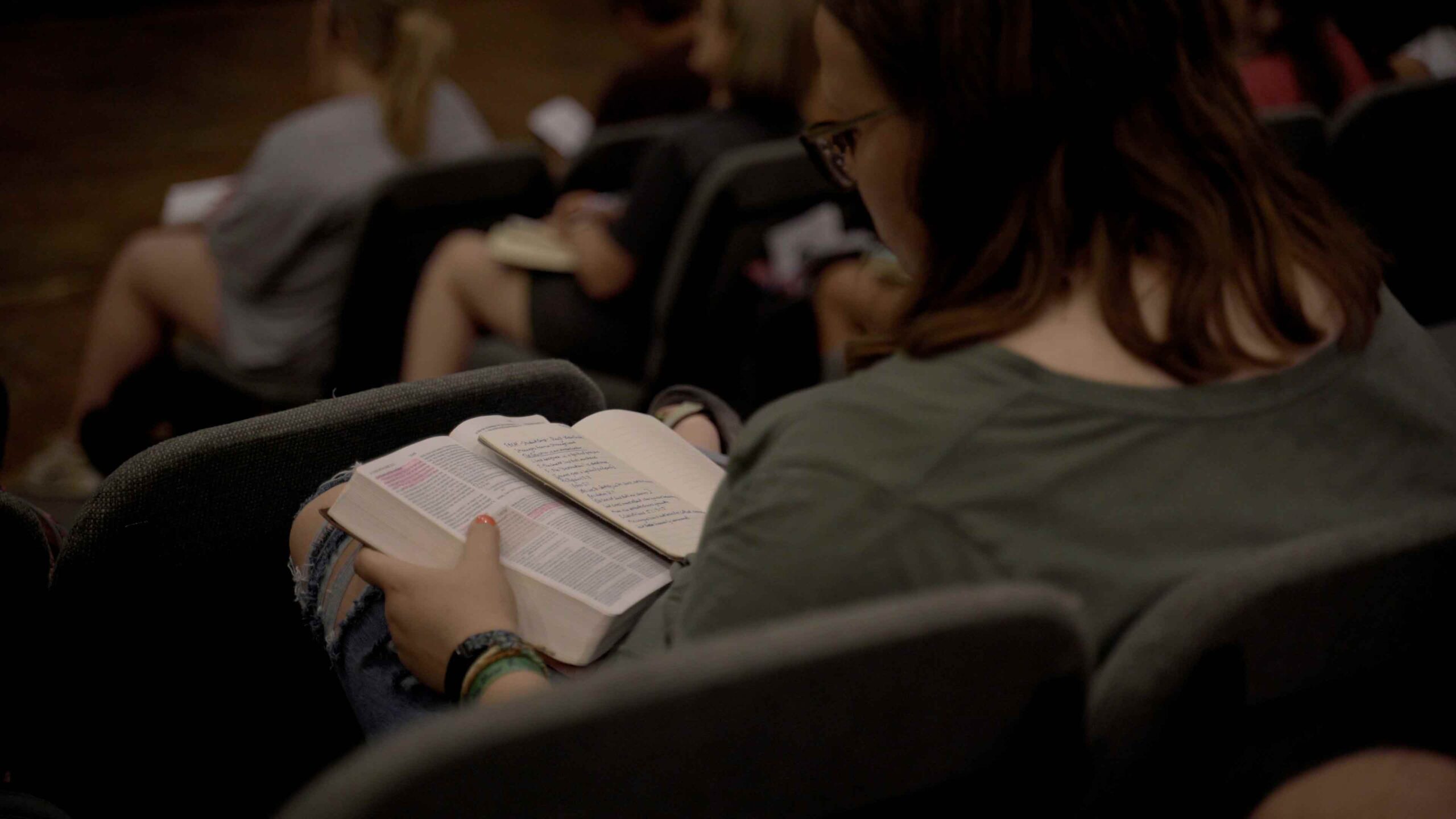

The Practice of Prayer

KC JONES|GUEST About two years ago I went through a season of spiritual depression. Even though I was raised in a Christian home with parents who taught me the Scriptures and encouraged me to pursue God and although I knew I was following His lead, I felt low, like something big was missing. I was imbued with a sense of discouragement so palpable that at times I felt like I could not breathe.  That is when the Spirit of God reignited my sense of wonder, instilled in me a longing for deep, enriching prayer, and ultimately brought me to my knees in awe of Him. For that is where it always begins, you see… with a hunger for God Himself.  The Difficulties of Prayer  Flannery O’ Connor felt a similar tug, as did I, to grow in her own prayer life. She confessed, “Dear God, I cannot love Thee the way I want to. You are the slim crescent of a moon that I see and my self is the earth’s shadow that keeps me from seeing all. What I am afraid of dear God, is that my self-shadow will grow so large that it blocks the whole moon, and that I will judge myself by the shadow that is nothing. I do not know You, God, because I am in the way.” 1   O’Connor’s confession seems to capture the difficulty we feel when approaching prayer. First, in order to emerge victorious in this practice, regardless of the snares that threaten to entice us away and destroy us is this: We must simply do it. We must practice prayer as a discipline until we grow from duty to delight.  Prayer is Powerful  We need to understand why we pray. Because this is true: Prayer is powerful. It changes everything....


The Practice of Prayer2025-02-24T15:52:09+00:00

All We Can Do Is Pray: Prayer for California and the Wildfires

SHARON ROCKWELL | CONTRIBUTOR This year, more than one illness spread through our extended family, hampering most of our plans for Christmas and New Year’s celebrations. It seemed like we missed so much of the fun we normally associate with Christmas time that I left our tree up a little longer than usual in an effort to hang on to the season. To extend some of the festivities, I even went with a friend to see the Rose Parade floats that were lined up for viewing on Jan 2nd. I usually just watch the parade on TV, but this year I felt the need to make the drive to Pasadena and smell the roses for myself. Who could imagine that less than a week later, I would be watching some of that same area go up in smoke as wildfires spread across southern California. Our local news is full of stories about individuals who lost their homes and businesses. Many left their homes with nothing but the clothes they were wearing. Yet as I have listened to the live interviews of people who escaped and who are waiting to hear if their house is still standing, or of those who have lost it all, one theme surfaced. They shared the perspective that they had lost only things. They had their lives, their loved ones and their faith. The subject of prayer came up often as newscasters casually ended their reports with the phrase “our thoughts and prayers are with you.” One commentator reporting the devastation as the TV cameras panned block after block of scorched homes even stated in a resigned tone, “All we can do is pray.” All we can do is pray? All we can do is pray!...

All We Can Do Is Pray: Prayer for California and the Wildfires2025-01-18T15:03:18+00:00

Nothing to Do But Pray

MARISSA HENLEY|GUEST It was around 4:45 a.m. when I gave up on sleep, got out of bed, and reached for my phone. I saw a notification from our family’s tracking app—my oldest son’s phone was out of battery as of 3 a.m., and I knew what that meant. I could picture my sleep-deprived college student in his apartment, lying across his bed, fully clothed, with all the lights on. He had fallen asleep without meaning to, which meant his phone wasn’t charging and his alarm wouldn’t wake him in time for class. My brain went into panic mode. It was near the end of the semester, so he could miss an important quiz or test. Within seconds, my anxiety convinced me that his GPA and career goals would be ruined by one morning of oversleeping. And yet, I knew I was powerless to do anything to wake up my son. I was left with a last resort that should have been my first response: I prayed. Praying for our children is a gift from the Lord, whether our children are babies in our arms or adult children living hundreds of miles away. The Westminster Shorter Catechism Question 98 teaches us this definition of prayer: “Prayer is an offering up of our desires unto God, for things agreeable to his will, in the name of Christ, with confession of our sins, and thankful acknowledgment of his mercies.” As we consider this definition, we see how prayer shouldn’t be a last resort. God uses the gift of prayer to grow our dependence on Him, comfort our troubled hearts, and turn our focus to His faithful purposes...

Nothing to Do But Pray2025-01-02T20:18:05+00:00

Serving Our Public Servants

DOMINIQUE MCKAY |GUEST Another election day has come and gone. Some are happy with the results and others are angry or confused. As church leaders, we can be overwhelmed by the expectations that congregations demand from us when it comes to politics. But what if there was a way to help them reset their perspectives and right-size the role of public service? Romans 13 teaches us that those who are in authority have been put there for our good — a force for administering justice against wrongdoing. This sets the stage for how we should approach our public servants. Not with suspicion or disdain, but instead with an open heart for how God will use them for his purposes, which are always good. In the book of 1 Timothy, Paul encourages Timothy to pray for all people, but he specifically calls out “kings and all who are in high positions” with a care for how they lead. This is the heart posture God is commanding us to have for our government leaders — compassionate and desiring their success. But how exactly do we practice that heart posture?...

Serving Our Public Servants2024-11-03T19:14:10+00:00

Gethsemane Glasses

LAURA PATTERSON | GUEST I awoke that Friday morning in May to the same white walls and sterile smell for the twenty-second day in a row. The same dingy blinds covered the same window. The birthday cards I’d received the week prior were still taped up on the mirror on the far wall. The now familiar white blanket engulfed my legs and torso. The sense of familiarity I’d come to find in my surroundings was suddenly arrested that morning as feelings of shock, dread, and numbness flooded my body and left me wondering if I was truly awake. I’d just given birth during the wee hours of the morning and, after being returned to my antepartum room without my baby, I had somehow managed to sleep for an hour or two. Doctors, nurses, and a lactation consultant visited me in my haze, and I eventually got the news that I could go meet my child. My nurse assisted me into a wheelchair, and I took the longest ride of my life to the adjoining children’s hospital. I knew I was headed to meet my baby in the neonatal intensive care unit, but no amount of exposure or information could have prepared me for the shock of meeting my two-and-a-half-pound infant covered in tubes, lines, and bruises. The well-intentioned nurse assigned to my son that day noticed my tears, came to the bedside, and said gently, “it’s ok, mom.” “NO, IT’S NOT!” I yelled deep within my soul.  From Demanding to Entrusting My internal cry that morning was full of truth. My baby was not ‘ok’. The neonatologist sat my husband and I down in a private room only hours later  to help us understand that we should expect our son to die within a couple of days’ time. I felt the very visceral reality of life in a sin-sick, disease-laden, death-cursed world. Crying, ‘It’s not ok!’ wasn’t wrong. But it was incomplete...

Gethsemane Glasses2024-10-27T21:14:50+00:00

Pray for Your Pastor

BARBARANNE KELLY | CONTRIBUTOR “[Pray] also for me” —Ephesians 6:19 How do you pray for your pastor? Some of the most beautiful, personal, and instructive prayers in the New Testament are written by the Apostle Paul, expressing his own prayers for his beloved readers. But when he sprinkles prayer requests for himself into his letters, these too are instructive. Paul’s prayers are notable not only for what he requests, but also for what he doesn’t. When writing from prison, Paul doesn’t ask that his prayer warriors seek God for his release, personal comfort, or vengeance against his captors. These would have been merely temporary goals after all, and Paul’s eyes were fixed on a farther horizon. In one instance he does ask for a warm cloak and his books (2 Tim. 4:13), but as he closes his letter to the Ephesian churches, he asks for words and boldness to preach the gospel. Paul’s priorities for prayer are centered upon his calling as a minister of the Word. Taking our cue from Paul, what does your pastor need most? Words If anyone had words at his disposal, it was the Apostle Paul. Prior to his arrest and imprisonment, his ministry focused on the verbal proclamation—oftentimes spontaneously—of the gospel of Jesus Christ. He spoke before Jews and Gentiles, servants, philosophers, and kings. The words he wrote in letters to churches and his friends and proteges fill the New Testament, revealing the mystery of the gospel and the transcendent God of heaven. And yet he knew he needed Holy Spirit-inspired words with which to deliver his life-giving and Christ-centered message. He didn’t want his own words; he wanted God’s words. The reason Paul had words to communicate the message of salvation at all was because he had the help of the Spirit of Jesus Christ and a growing army of prayer warriors pleading for the gospel to flourish under his ministry (Phil. 1:19). Pray that your pastor would have Spirit-empowered words to preach the gospel in season and out....

Pray for Your Pastor2024-10-12T15:38:39+00:00

How Prayer Changes Us

MARISSA BONDURANT | CONTRIBUTOR We had finished our conversation at the coffee shop and were hugging in the parking lot when my friend mentioned she was going to walk home. Summers in South Texas are not known as prime walking weather, so I quickly offered to give her a ride. She eagerly refused, explaining that she prays as she walks and didn’t want to miss that time with the Lord. Driving home with my air-conditioning blasting and a podcast playing I felt convicted by her joy. I tend to actively avoid situations where I will be uncomfortable, yet here was my friend— excited to sweat(!)—because that light and momentary suffering was nothing compared to spending time with Jesus. What is so compelling to her about prayer? Why is she willing to suffer a bit to spend that time with God? Part of what drives her is that she knows that prayer changes her. She sees sanctification unfolding in real time. And she hungers for it. If I’m honest, most of my prayer time is spent asking God to change things in my life. I want him to remove suffering, give wisdom, open doors, fix people, and give me more patience while I wait for Him to act. It’s about getting God to do things. And it’s about me being unsatisfied with what He’s already done...

How Prayer Changes Us2024-09-27T18:49:25+00:00

Equipping You For A New Women’s Ministry Year

MARIA CURREY | CONTRIBUTOR With a new Women’s Ministry year peaking on the horizon, leaders’ minds are perking with everything from finalizing calendars, setting the fiscal year budget, and encouraging and recruiting existing and new team volunteers—just to name a few likely thoughts on your prayerful punch lists! Sometimes, facing new year expectations seems daunting, like scaling a ministry-Mt.-Everest. Fortunately, we have the best gear for whatever climb we face: God’s Word, prayer, and leaders before and behind us as “spiritual sherpas” of sorts. Jesus is first and always at the front as our guide and hems us in from behind, but it is also helpful to know the resources and relationships of trusted leaders who have climbed similar mountains. The Priority of Prayer The combination of God’s Word and prayer first informs our preparations. Pulled from God’s Word, prayer was the pacing of Jesus ministry from His baptism in Luke 3:21 to His final breath in Luke 23:46 and in His consummation of blessing and breaking bread with His disciples in Luke 24:30. As we follow in Jesus’ perfect footsteps, trusting established placement of our feet, He gives us the critical cues to pray without ceasing as we prepare. Jesus, who was perfect in every way, relied on prayer as the lifeline with God His Father; if it was critical for Him, it is even more essential for us...

Equipping You For A New Women’s Ministry Year2024-07-24T13:50:16+00:00

Five Things I Learned From My Husband’s Life-Threatening Illness

LEAH FARISH|GUEST “Inoperable.” “Stage 4.”  “Radiation won’t help.” “Aggressive cancer.” These are things I was told about my husband Kent’s sudden, alarming condition two months ago. But I was also told important things from the Word of God. Since those are the things that apply to everyone, those are what I want to tell you. When we thought he had mere weeks to live, we sat together in awe as he sipped bone broth, the only thing he could stomach. He had started chemotherapy the very day he first saw an oncologist, who admitted him straight to the hospital. We murmured in disbelief to see my husband, a physician himself and a dynamo of energy, quickly declining to a wraith who couldn’t walk across the street. I started asking him his passwords, and hired a yard man. Calls and texts started to pour in to my phone with questions and offers of help. One thing we resolved to do was not to criticize or minimize any attempt to comfort or assist us.  I learned not to second-guess messages or gestures of concern, no matter how brilliant or clumsy. We agreed we would take everything that people brought to our situation, no matter how big or small, as straight from God’s hand. We had no desire to use what we thought were Kent’s last days in critiquing ways that others tried to express their love. Love doesn’t keep count of wrongs suffered, so if we had had expectations of what someone should do for us, we gladly dropped them. Since when one member of the Body hurts, we all hurt, maybe wisdom from the pain might come to us through another who was not technically suffering. Kent even started habitually opening his hands upward whenever someone would proffer a prayer or encouraging word. Soon we felt the surrounding cloud of loving support sent by the Body of Christ...

Five Things I Learned From My Husband’s Life-Threatening Illness2024-07-04T15:43:41+00:00

How Do We Pray When Prayer is Hard

ELIZABETH TURNAGE | CONTRIBUTOR “Father, please send your angels to protect my mom.” I spoke this prayer on night ten of my mom’s fierce battle with Covid. Five hours later, she was dead. Have you ever received a resounding “no” to heartfelt prayers? Have you prayed prayers for days, months, and years and seen no evidence of change at all? Prayers for the return of a wayward child, prayers for freedom from deeply rooted sin patterns, prayers for relief from chronic pain? Perhaps with David, you have cried day and night but heard no answer and found no rest (See Psalm 22:2). In such seasons, bitterness or cynicism threatens to mute our tongues. How do we pray when prayer is hard? Three Crucial Practices Three crucial practices help us to pray when prayer is hard: learning the language of lament, which deepens faith; leaning into community, which grows hope; and listening for God’s declaration of his unfailing love, which expands love for God and for others. Learning the Language of Lament When prayer is hard, learning the language of lament can help us to emerge with a stronger faith. As Pastor Mark Vroegop explains, “Lament is a prayer in pain that leads to trust.”[i] Lament not only expresses our faith in the goodness of God, it also strengthens our faith in its expression. Prayers of lament often process through four categories: turning to God, naming the grief, asking persistently and boldly for help, and expressing restored confidence. Lamentations, Jeremiah’s lament over the fall of Jerusalem, illustrates each of these categories. Rather than turning away from God when relief from suffering doesn’t come, lamenters turn toward God. Jeremiah addresses his complaints to God in raw words few of us would dare to utter aloud: “You have wrapped yourself with a cloud so that no prayer can pass through” (Lam. 3:44 ESV). Lamenters name their grief, refusing to minimize their suffering: “I am the one who has seen the affliction under the rod of his wrath; he has driven me and brought me into darkness without any light” (Lam. 3:1). Arguing that their current experience doesn’t seem to match their understanding of God’s goodness and mercy, lamenters ask persistently and boldly for help. Jeremiah keeps crying for help, “Remember, O Lord, what has befallen us; look, and see our disgrace!” (Lam. 5:1). In doing so, he expresses his firm conviction that “no one is abandoned by the Lord forever” (Lam. 3:31). Not always, but often, lamenters turn from complaint, expressing restored confidence that the Lord will redeem and restore again. Jeremiah’s turn comes in the familiar assurance: “But this I call to mind, and therefore I have hope: The steadfast love of the Lord never ceases; his mercies never come to an end; they are new every morning; great is your faithfulness” (Lam. 3:21-22). As Vroegop asserts, lament “stands in the gap between pain and promise.”[ii]  Learning to lament helps when prayer is hard...

How Do We Pray When Prayer is Hard2024-06-23T18:49:09+00:00
Go to Top